A guide to beginning your journey in sports photography
Have you ever been at a stadium watching your favorite team play or at a race track cheering on your favorite driver and thought to yourself “I’d really love to capture these moments with my camera!”? Well, with the right amount of determination, commitment, hard work, and dedication, you can be right there on the sidelines with your camera in hand. Sports photography can be an incredibly rewarding path, whether as a career or a serious hobby. This type of photography combines technical skill, timing, storytelling, and often a love of the particular sport you are photographing. Below I have compiled the key points and steps to take to navigate your path into the world of becoming a sports photographer.
Step 1 - Understanding Basic Photography Skills
First and foremost, you should make sure you learn and gain an understanding of photography basics. Many sports involve fast moving or erratically moving subjects, which means having a solid understanding of the photography triangle will help you create sharp clean images. The photography triangle is that magical three-part recipe that involves three key elements that work in-sync with each other to create proper exposure. This means, that when you change one setting, one or both of the remaining two settings will also change to maintain proper exposure.
- Shutter speed controls your ability to freeze (or not) your subject in action. In most cases a fast shutter speed (1/1000 or higher) will be required to stop your subject in motion and create a sharp image. In some situations using a slower shutter speed my be better, such as to show movement and speed. Many times while photographing racing, I will slow my shutter speed down to under 1/200 or even under 1/100 sec to blur out the background as a car speeds by, thus adding the element of motion into the photo, but more on that later.
Shooting at a higher shutter speed will mean that your aperture will need to be opened up or ISO increased to maintain your exposure.
- Aperture controls the amount of light getting into your lens as well as provide depth of field for your subject. Often times when photographing sports, you will be using the lowest (widest) aperture your lens will allow as this will allow in the most light as well as separate your subject from the background.
- ISO controls how sensitive your camera’s sensor is to light. The higher the number, the more sensitive the sensor is to the light coming through the lens. Generally you want to keep this number as low as your shutter speed and aperture will allow you to, as higher ISOs are more prone to creating “noise” or grain in images. Today’s modern DSLR and mirrorless cameras are quite good at producing clean images at higher ISO numbers, but if you’re starting out with an older or an entry level camera, noise will certainly be a factor.
Once you have a good understanding of how the exposure triangle works, you will be well on your way to taking good sports photos. This brings us to the next basic photography principle, focus modes.
- Today’s modern DSRL and mirrorless cameras have some amazing autofocus technology and offer multiple autofocus settings for various situations. When photographing sports, more often than not, you will be using continuous or servo (canon) modes. Continuous (servo) mode allows the camera to maintain focus while the camera takes multiple photos in burst mode. This mode also allows the camera to maintain focus while tracking moving subjects.
- The last basic photography principle is composition and timing (anticipating action is just as important as reacting to it). Mastering the exposure triangle will do you no good if you cannot compose a quality image in which the viewer can understand what is happening. Making sure to work on your timing is also key. Being able to anticipate what’s going to happen will be crucial in creating excellent sports photographs. Want to work on your timing? Practice by photographing runners, cyclists, or even your dog playing fetch. Practicing on subjects such as this away from the games, can help build your timing and confidence come game day.
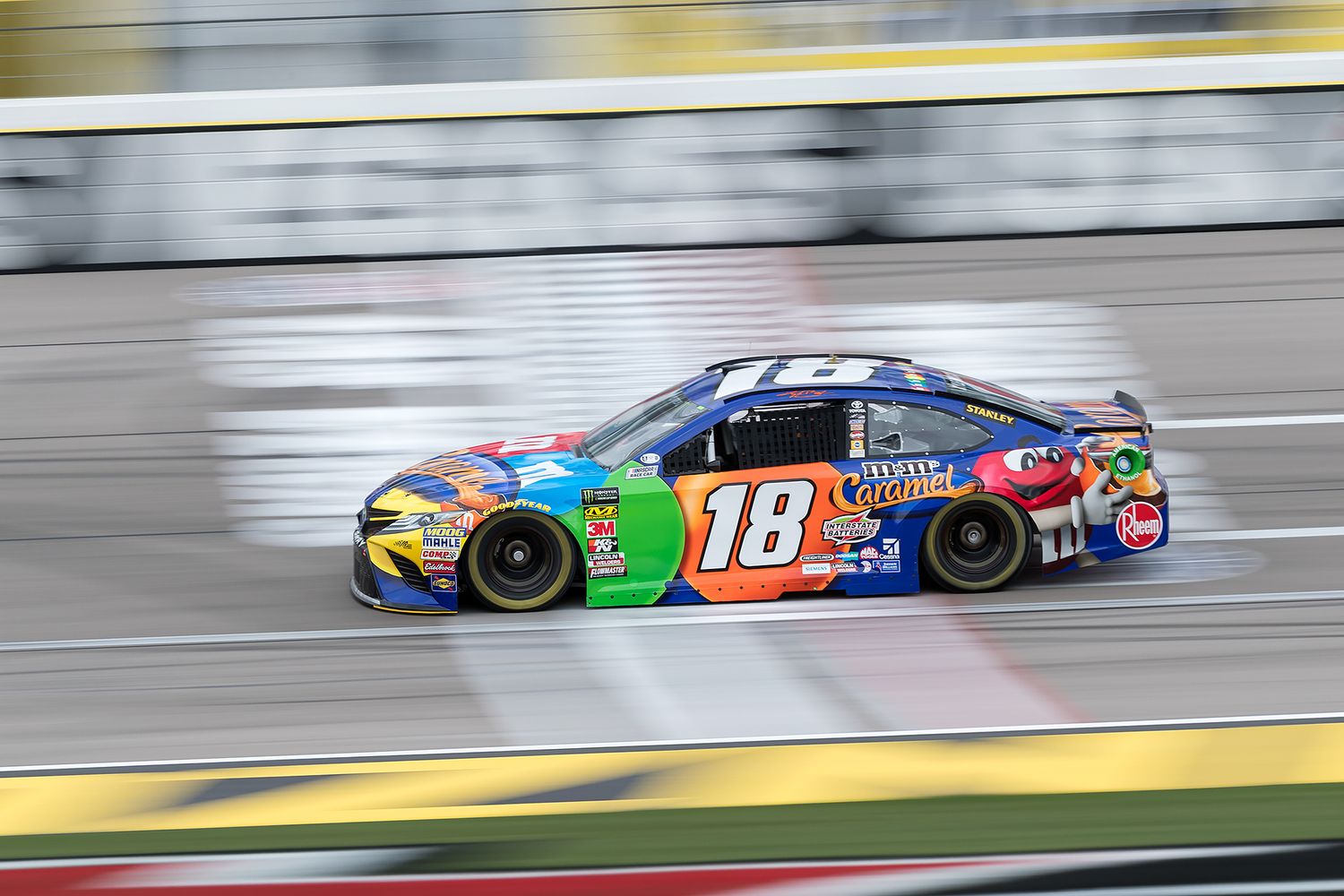
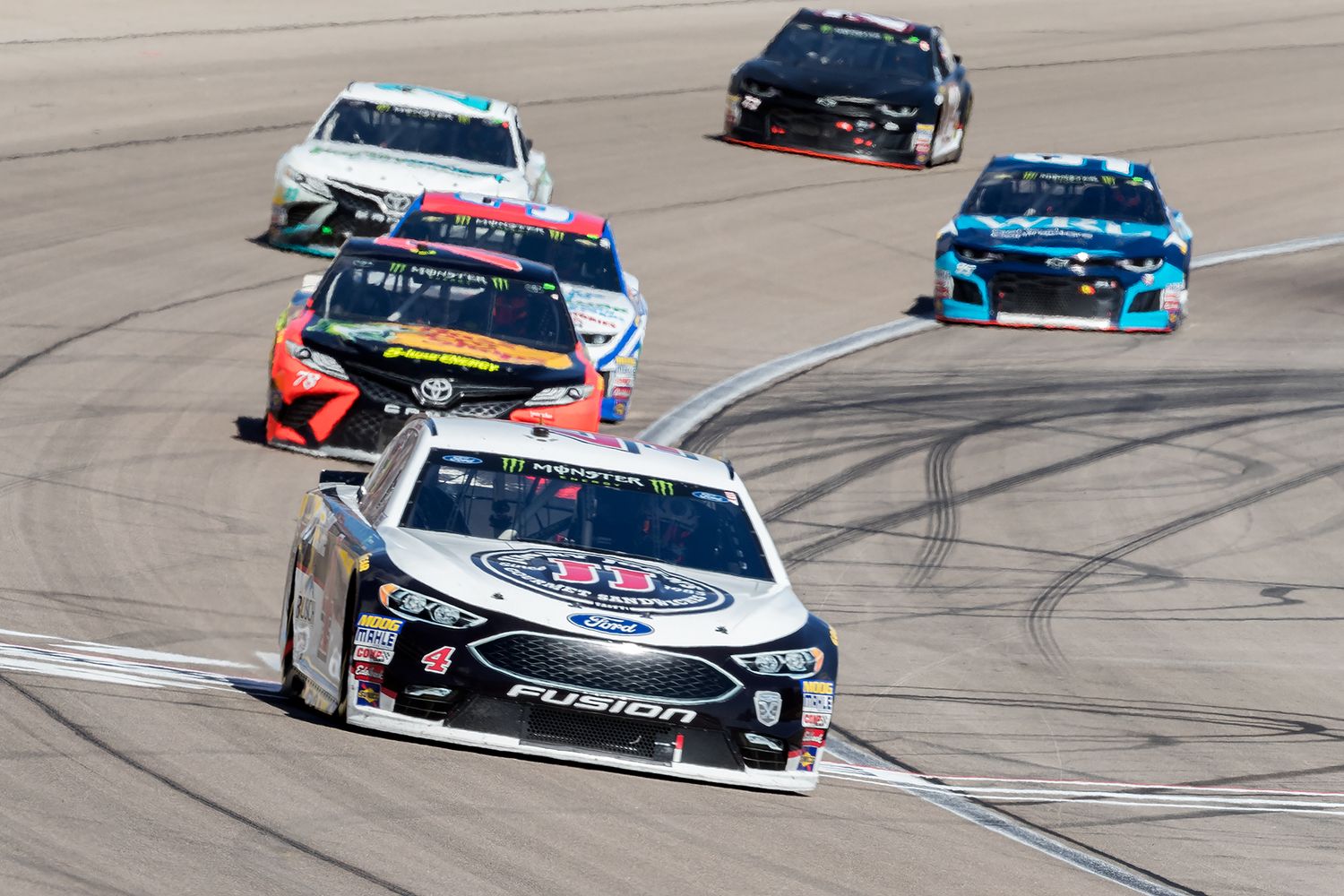
With proper technique, a slow shutter speed can add to the sense of speed when shooting auto racing as it will allow your subject to stay sharp and in focus while making the background a blur as it should be with a car passing by at 190 mph.
Canon 1Dx Mark II | Canon EF 200-400 f4L @ 290mm | f10 | 1/80 sec | ISO 100
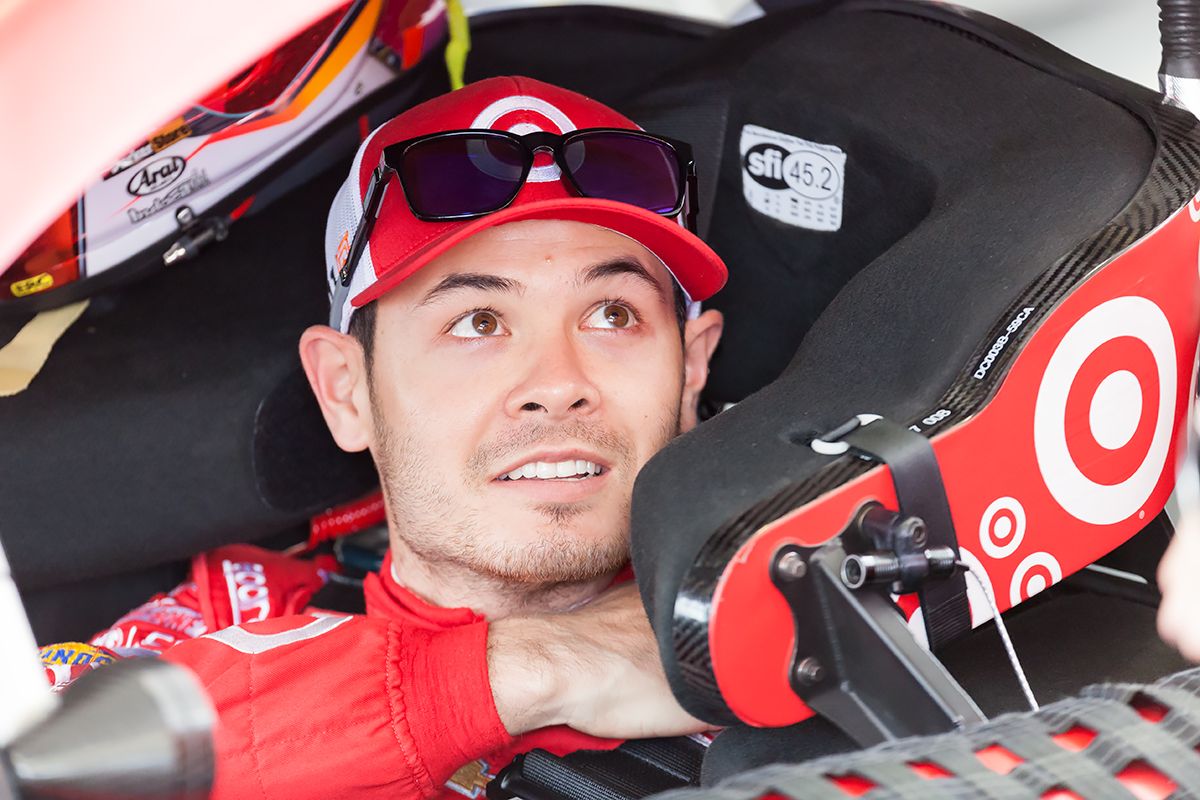
A higher ISO can be used when a wide aperture is not able to be used in order to keep shutter speed higher to avoid any blurriness from hand shake or other atmospheric conditions such as wind. For this shot I did not have access to a f2.8 lens at that moment, so I needed to shoot at f4 with the ISO bumped up since the inside of a race car creates a dark shot due to shadows.
Canon 5D Mark II | Canon EF 200-400 f4L @ 400mm | f4 | 1/200 sec | ISO 3200
A fast shutter speed is good for freezing action in instances like when shooting race cars head on while they are approaching at 190 mph.
Canon 1Dx Mark II | Canon EF 200-400 f4L @ 400mm | f10 | 1/800 sec | ISO 400
Step 2 - Start Small and Local
While its great to have goals, you more than likely will not start out photographing sports with major events. Many great sports photographers started by photographing local youth leagues, high schools, or tournaments in their communities.
One of the best ways to start out is by asking local teams or schools if they’d like free coverage in exchange for access to photograph their games. Often times a school will allow you access in exchange for providing them with a selection of images you captured during the game.
Another option is attending open public events like marathons or amateur competitions where there is usually not restrictions on cameras. These types of options give you the chance to learn positioning, crowd navigation, and how to anticipate game flow. Additionally, getting your start by photographing local schools or youth leagues, the action is typically slower, which can help you master tracking subjects and capturing sharp images.
Step 3 - Invest in, rent, or borrow the right gear
While it is true that a great photo can be taken with any camera as long as the person behind he camera knows what they’re doing, certain gear really helps when it comes to photographing sports.
- For a camera body, you will want a DSLR or mirrorless camera with fast burst rates (8+ fps is ideal). DSLR cameras such as Canon 5D Mark III, 1Dx (Mark I, II, or III) or their Nikon or Sony equivalents are very much adequate for the task offering 7+ frames per second burst rates. The best part is, you can purchase these used from a few reputable sellers for a fraction of the cost of a new camera. If you want to keep up with technology, I suggest jumping in to the mirrorless world as DSLRs are nearly phased out now with very few manufacturers still producing them. One of the best mirrorless cameras on the market at the moment for sports that won’t break the bank is the Canon EOS R6 Mark II. These can be bought new for I believe just over $2000 (USD), refurbished through Canon USA for around $1800, and used ranging from $1500-1800. With a 24MP sensor, this camera is a beast when it comes to high ISO performance while shooting in low light. If money is no object, the Canon EOS R3 and R1 are the cream of the crop for sports shooting in the Canon line. Nikon and Sony both also make excellent mirrorless bodies. It really comes down to personal preference.
If you haven’t used cameras much more than the occasional picture, I highly suggest going to a store where you can try them out in person so you can hold them in your hand, scroll through the menus, and see how the weight feels. After all, the last thing I want to do is shoot an event for 2-3 hours with gear that isn’t comfortable in my hand, and with menus that are confusing to navigate.
- When it comes to lenses, you will want at least one telephoto zoom lens such as a 70–200mm f/2.8 which is a staple in almost every sports photographer’s bag. Next, you’ll want to have a wide angle zoom such as a 24-70mm or 24-105mm. Depending on which sports you would like to cover, these two may suffice, however, if you’re goal is to photograph field sports such as football and soccer, or racing on oval tracks or road courses, you will want to invest in a longer super telephoto lens such as a 400 or 500mm prime.
Fast lenses are the key to success. Lenses with a wide aperture, most often f2.8 are the most sought after. These lenses allow the use of wide apertures while shooting at higher shutter speeds, which helps reduce the use of higher ISOs, thus keeping image “noise” to a minimum.
If buying isn’t feasible at first or you’re not 100% sure you’re ready to make the investment on a piece of gear, renting gear or buying used is a smart option. Renting will give you the ability to try before you buy and decide if you want to go all-in. Some of the rental companies even allow you to purchase the item at the end of your rental period if you decide you actually want the item.
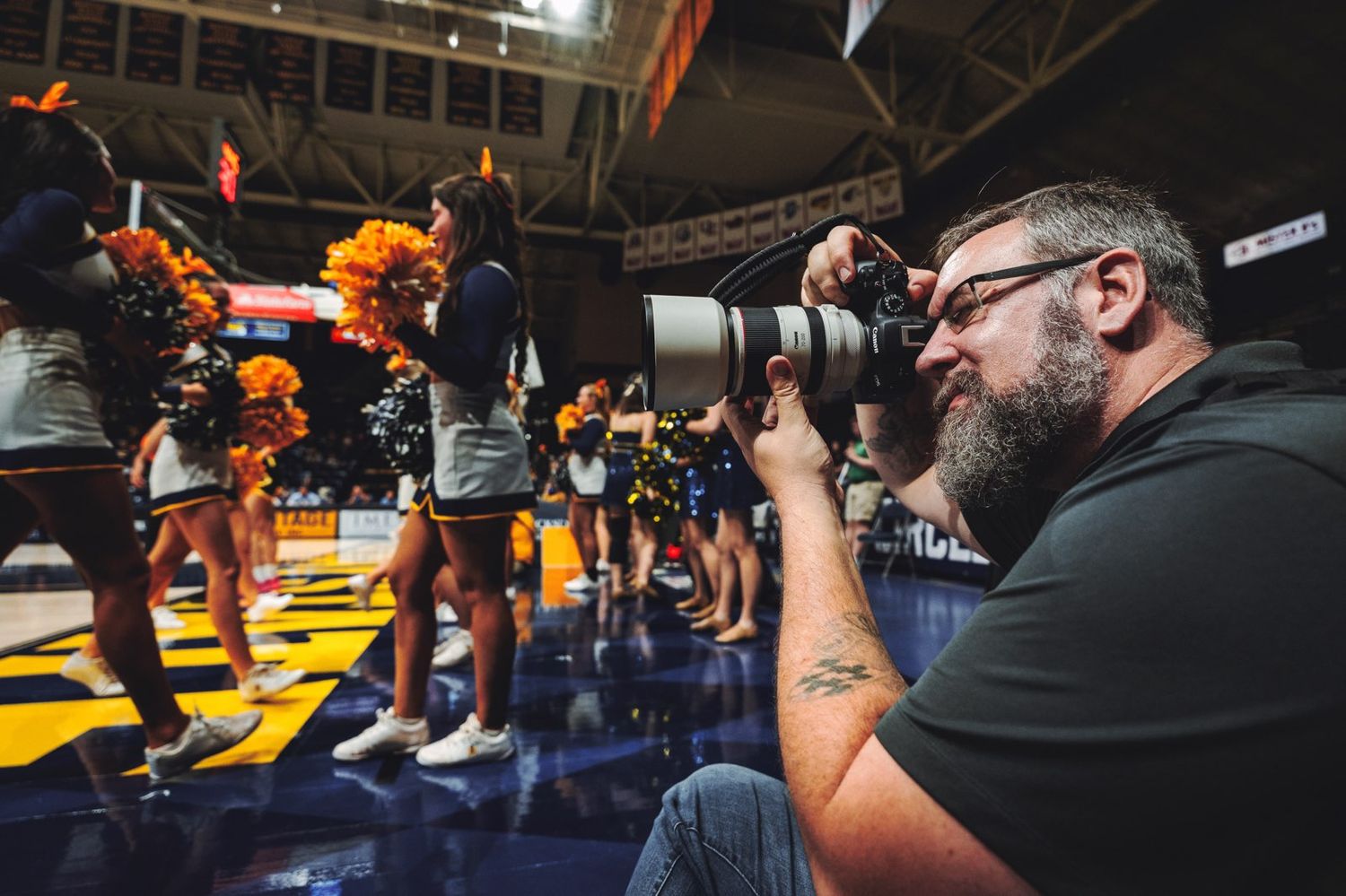
Here i am in action with one of my main workhorses for shooting basketball; my Canon RF 70-200 f2.8L paired with one of my Canon R6 Mark IIs. This combo really is a powerhouse for sports and it doesn't break the bank compared to the Canon R3 or R1 bodies.
Photo courtesy of Raven Ordunez
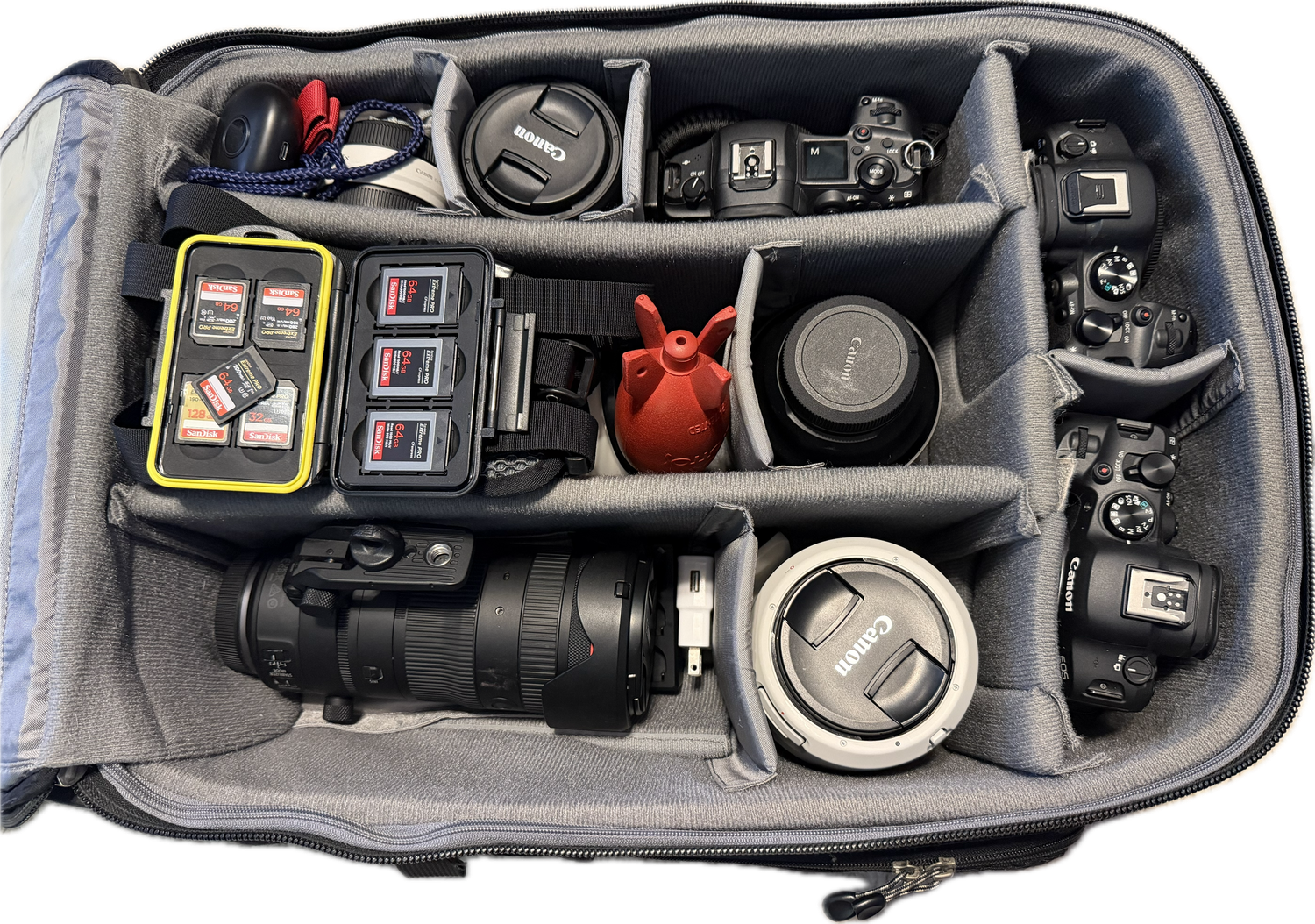
The contents of my bag on most game days this winter for basketball. I pack two Canon R6 Mark II bodies along with a Canon R5 (mainly a backup). For lenses I have my two main lenses being the Canon RF 70-200 f2.8L and the Canon RF 24-105 Z f2.8L. These are perfect for basketball and other close quarters sports. I also bring along by Canon RF 85 f1.2L and Canon RF 50 f.14L just in case I feel like playing around. Also buried in the bag under my harness is a Canon RF 100-500 f4.5-7.1L which is usually in there only because I'm too lazy to take it out of the bag. I also use a BlackRapid Double Slim Breathe harness for when I'm walking around the gym with my cameras. I also carry an abundance of memory cards, a rocket blower for cleaning dust from lenses and sensors, etc.
Step 4 - Build a Portfolio
Now that you understand photography basics, have taken advantage of opportunities to shoot, and have the right gear, its time to create an online gallery to show off your work. Using a gallery hosting site such as Flickr is a good option or even creating a dedicated Instagram page with your best shots is the perfect way to show people what you have to offer. When building your portfolio, focus on showing shots where you captured peak game action as well as shots showing emotion. Use your portfolio to show that you can tell a story with your photos. Also, be sure to show that you can shoot from different angles. Having a portfolio with all photos being rom the same angle will not look good and certainly will not lead to messages or emails in your inbox asking you to about your availability to cover an event. After all, a well-curated portfolio can open doors to freelance work, approval for credentials, or internships.
Step 5 - Know the Sport You're Shooting
This may be one of the most important lessons. You can have a perfect understanding of the exposure triangle, the best gear, and an all-access pass, but if you don’t know anything about the sport you are photographing, you may not come away with many useful photos. Understanding the rules, flow, and key moments of a sport can make the difference between walking away from a game with tons of great images or spending a couple hours being confused about what’s going on and taking only a handful of good, clear images. Understanding the sport will allow you to position yourself where for chances to take photos of the best action as well as allow you to anticipate the big plays instead of reacting late. This will allow you to tell a more powerful story through your images. For example, in basketball, being able to anticipate a fast break or dunk opportunity lets you be able to focus on the correct player(s) before the moment happens.
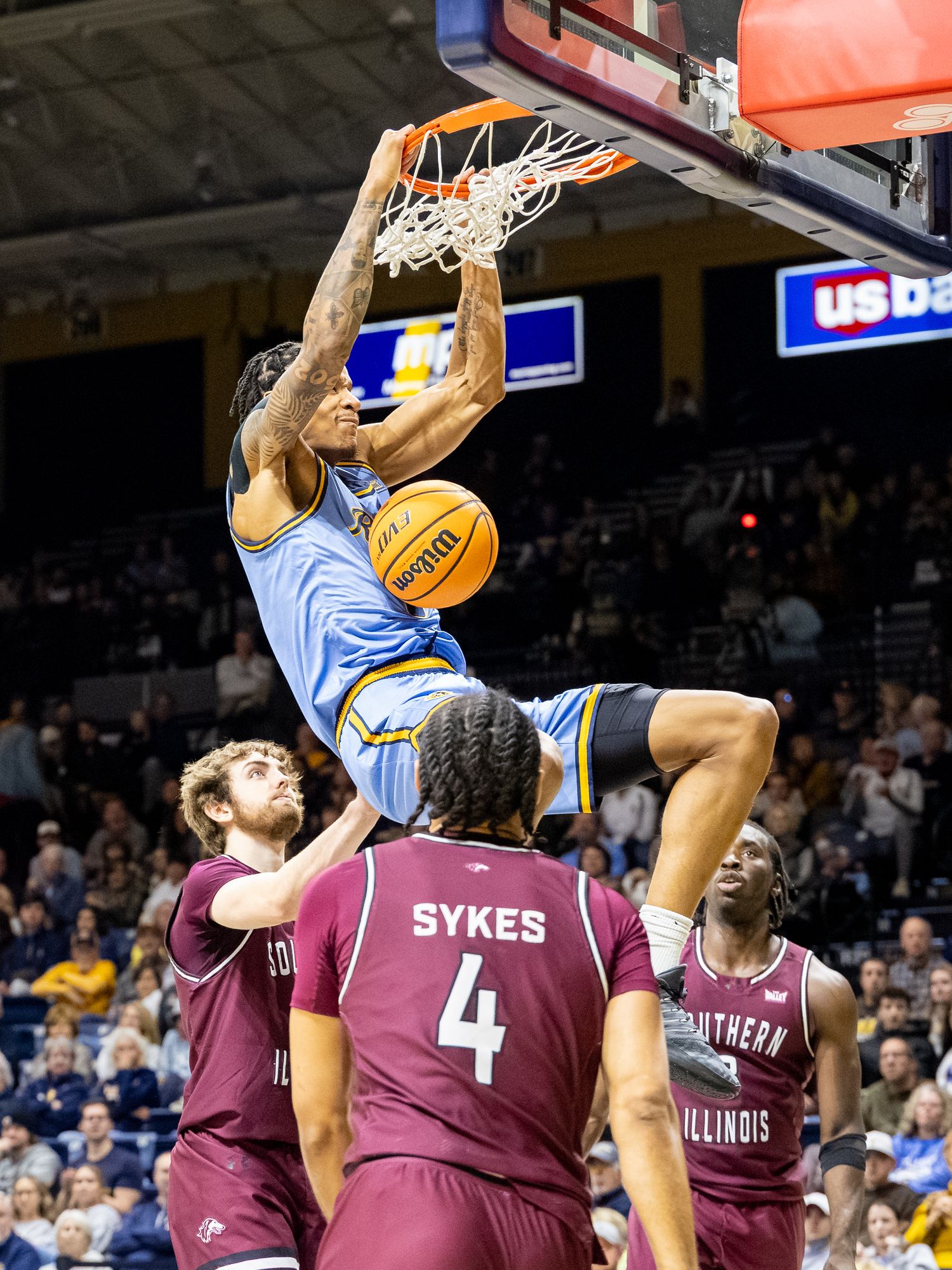
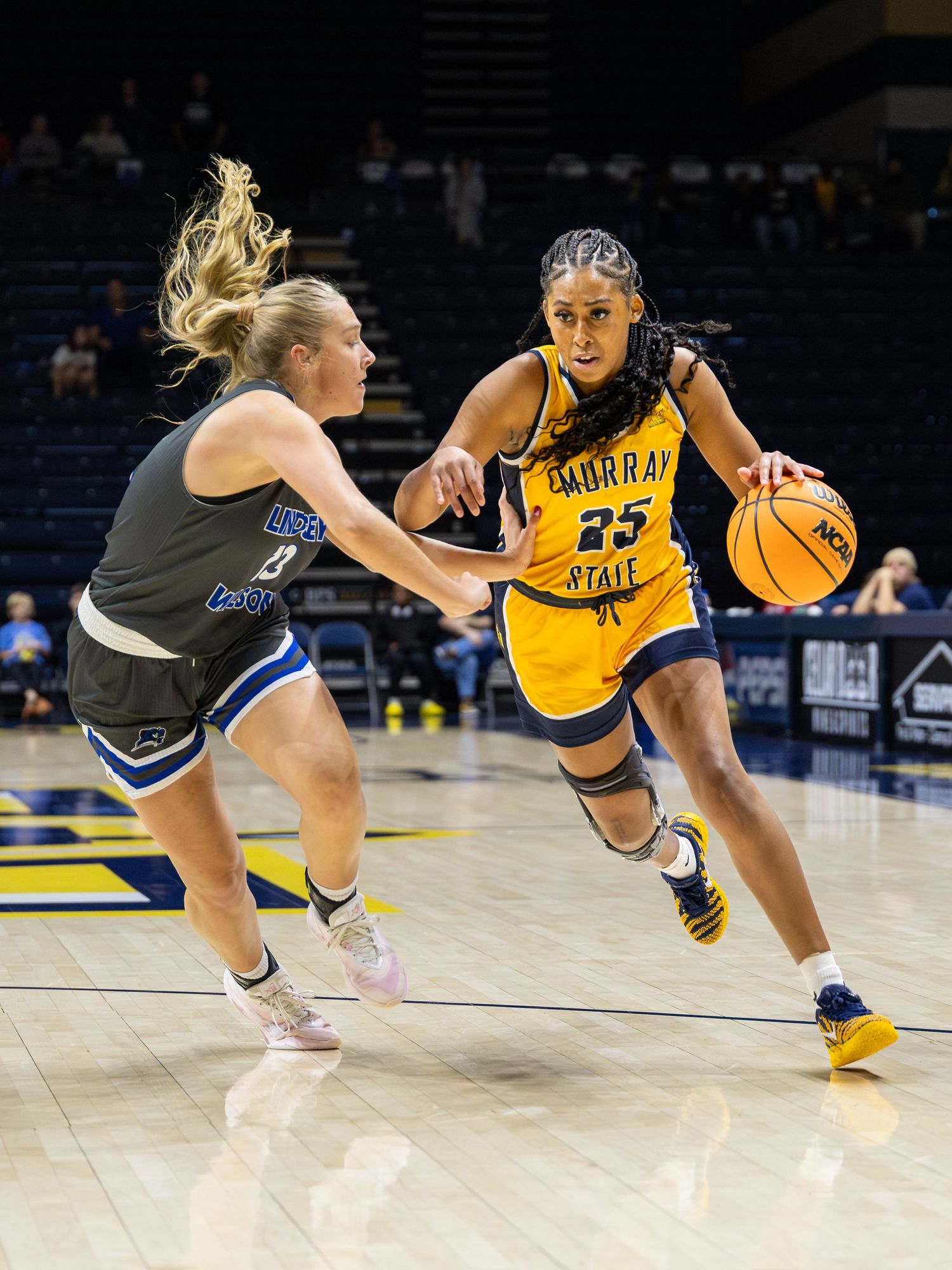
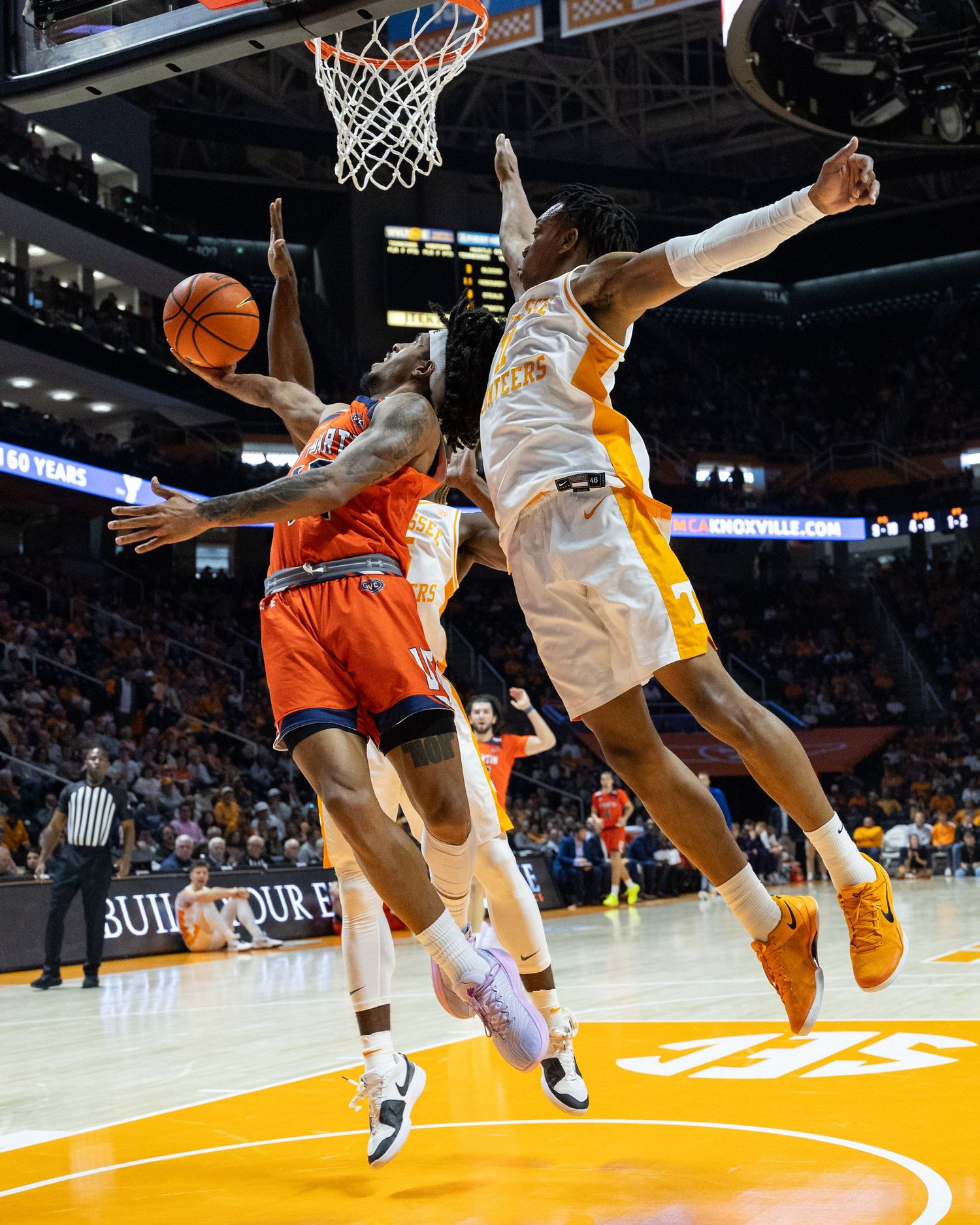
One of my favorite sports to photograph when it comes to team and stick/ball sports is basketball. I have a very good knowledge of the game as I used to play the sport in my younger days. Having that knowledge of the sport you're shooting allows you to anticipate a player making a cut across the baseline or going up for a dunk or simply making a pass. Keep in mind that not every sports photo has to be of exciting action. Even players making a move to the basket while holding off a defender while dribbling the ball can make for quality dynamic images.
Step 6 - Start Networking and Seek Credentials
Eventually you will want to grow and photograph larger events. Typically to get into these events, you will be required to have media or photographer’s credentials. To obtain credentials you usually will have to have some form of association with a media outlet. To start out, reach out to local newspapers to inquire as to whether or not they are looking for any freelance photographers for their sports department. In addition to this, reach out to online sports blogs or local websites dedicated to covering teams in your area. Having your portfolio handy to show them your work is very crucial in getting a response or any kind from them usually.
Another option is to reach out to local sports teams media departments to volunteer your time photographing for them as staff or freelance. This can sometimes work at smaller colleges that don’t typically get national coverage.
Joining local or regional photography associations can help as well. For example, with my motorsports photography, I am an active member of the Eastern Motorsports Press Association. Being a part of associations such as that, in addition to having a strong portfolio, and a media affiliation can help out when teams or events are considering you for credentials.
Last, but not least, building relationships with coaches, players, and media staff is very important. Just make sure those relationships you build are GOOD relationships. Nobody wants to approve credentials for someone that rubs the coach or players the wrong way. Building these relationships can lead to regular gigs or opportunities.
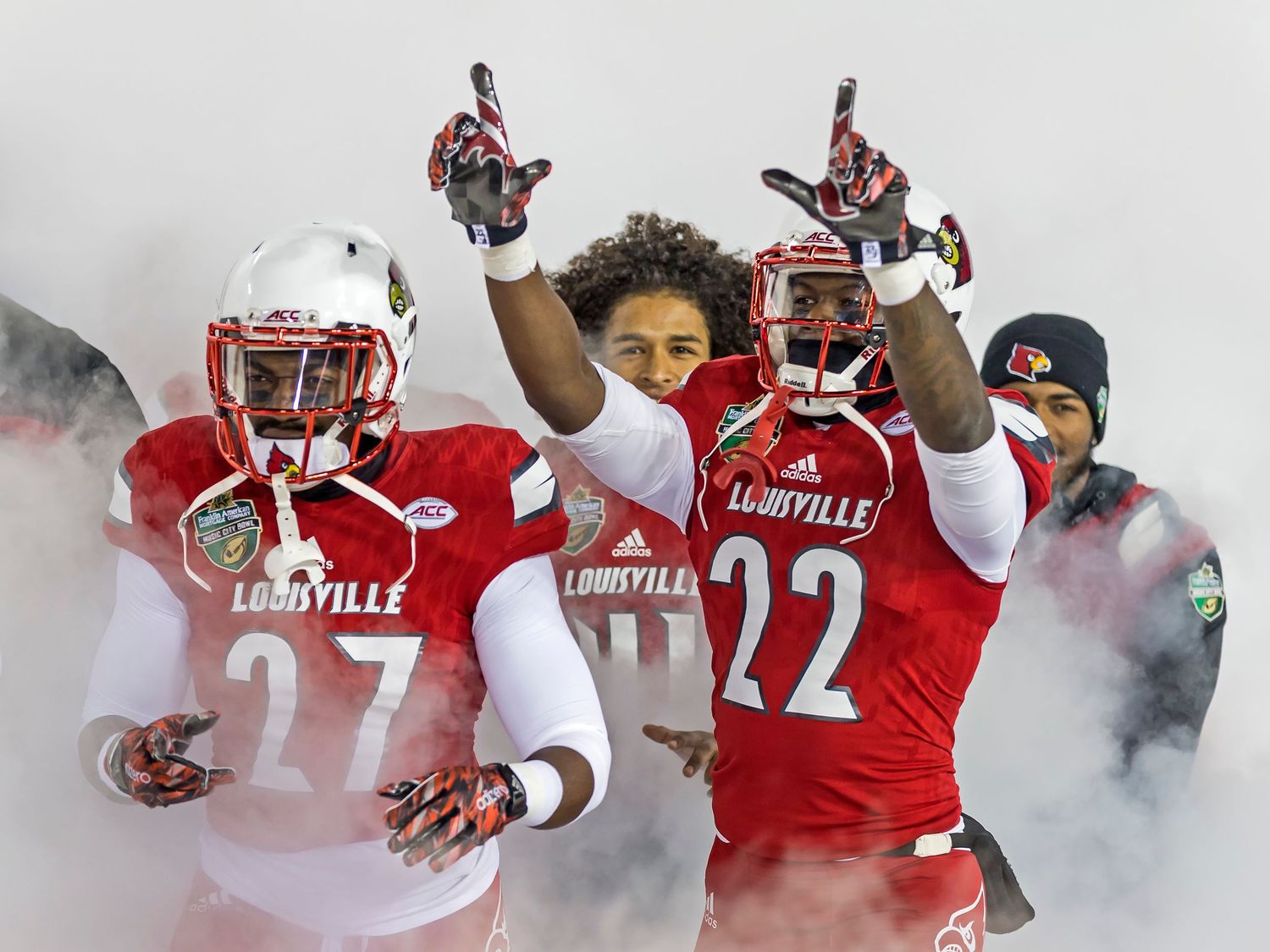
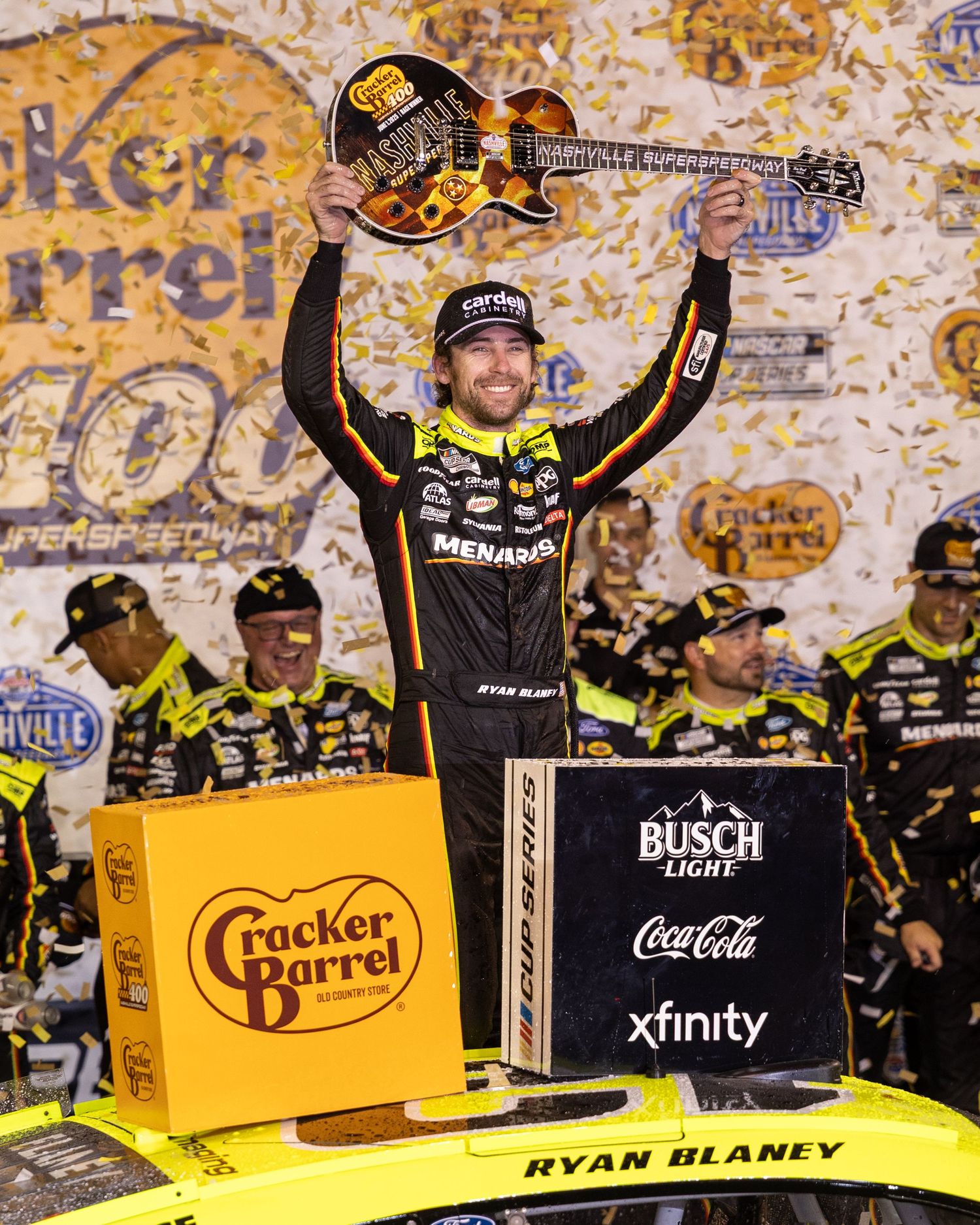
Step 7 - Keep Growing Your Skills
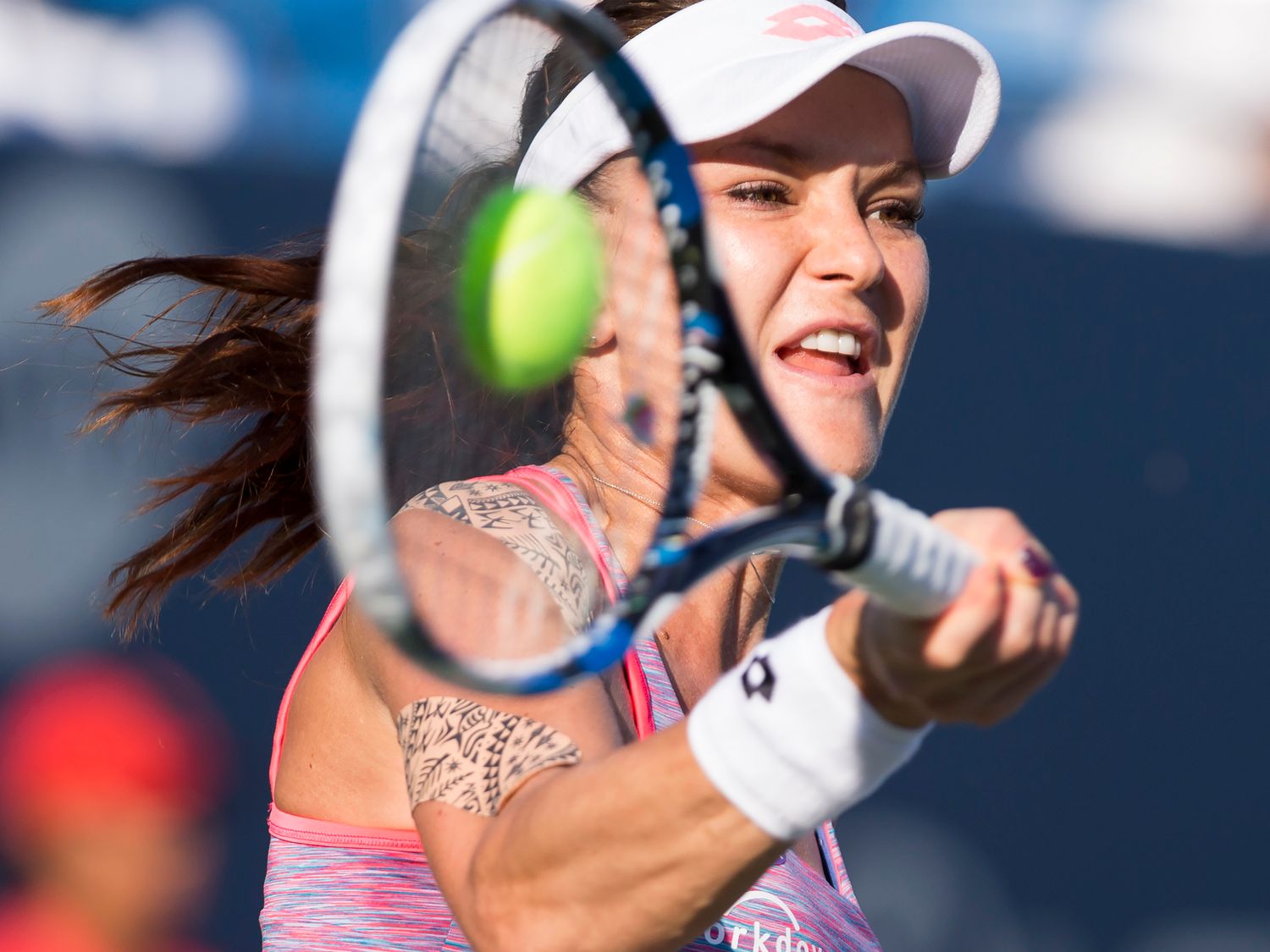
Once you have gotten comfortable with your shooting in the given sports you are photographing, try experimenting with adding creative elements into your photos such as panning, low-angle shots, and creative framing. Panning is a key creative technique that comes in handy when photographing sports like auto racing. Panning fast moving cars on a track gives the viewer a true sense of the speed the cars are traveling at. Panning is not only limited to sports like racing, as it can be used even in team sports such as basketball, football, soccer, etc.
Low angle photos are great when shooting sports such as basketball as it gives the players a larger than life look. Even sports such as football benefit greatly from getting low. Next time you watch a game on TV, pay attention to the photographers and how they are positioned. While yes, when we photograph basketball we sit on the baseline so that we don’t block the view for the fans, but we also sit because its a much better angle. Football photographers usually don’t sit, but you will see many kneeling on the sidelines and back of the end zone.
Just like many other forms of photography, creative framing can add a hole new look to your sports photos. Regardless of your sport there is almost always something that can be used to frame your subject. The framing doesn’t always have to be an object off the field (or court) either. I have used other players and their arms and/or legs to frame the subject player in my photo. Look around during the event and I will guarantee you will find a way to get at least one creatively framed photo.
Always be looking for inspiration as well. The internet is full of it from websites dedicated to sports photography to social media. There are tons of professional sports photographers that post their work on social media platforms such as Facebook and Instagram. Follow their accounts and browse through their photos for inspiration. There is definitely no shortage of sports photos online to check out.
Other options you can consider when it comes to growing your skills is sign up for workshops and online courses. One of the best workshops is Sports Shooter Academy, where you can get hands on experience at real sporting events. Another option, but usually hard to find, is assisting another experienced sports shooter.
Most importantly, work on perfecting your shots in camera so that they require minimal post processing. A lot of times sports photographers work on tight deadlines, which means getting photos from the camera to the client or media outlet quickly after the event, and even during. When I was shooting for Icon Sportswire, I had a requirement to transmit photos during halftime and after the game for most events. During events such as NASCAR I would also find time to transmit during the race itself. Getting your images correct in camera makes doing this possible in a very timely manner.
Learning software used for organizing, keyboarding, and culling photos makes this process quick and easy as well. My favorite software for this over the years has been Photomechanic. It is a very straightforward piece of software which allows you to setup IPTC data such as captions, keywords, and important event data prior to dumping your photos on the computer. It also allows you to quickly ingest the photos from your memory card and then accept or cull photos, then crop and transmit via FTP server to your client or organization. Learning post-processing software such Lightroom or Photoshop to polish your shots can also be valuable as well.
Bonus - Potential Career Paths
If sports photography is your calling and you want to make a career out of it, look into these roles:
- Freelancer / Contributor for local media outlets
- Wire service photographer (e.g., AP, Getty, etc)
- Content creator for colleges or pro teams, athlete/athletic brands, or sports marketing
If your goal as a sports photographer is more of a hobby or “side hustle” in your spare time, consider finding a role as a team photographer for local high schools, small colleges, or “beer league” teams.